Smoke Smell That Will Not Leave After a Fire in Southfield
Smoke odor survives ordinary cleaning because it is not sitting on surfaces; it is inside them. Heat during the fire opens pores in paint, wood, and fabric and drives odor compounds in, and they re-emerge every time the room warms up. That is why a house can smell fine on a cool morning and strongly of smoke by a warm afternoon, and why scented products only win for a few days.
In a Southfield multi-unit building, the smell that survives cleaning is usually in the shared runs: corridors, chases, and duct systems that serve units beyond the one that burned. The honest test is run unit by unit in a shut building, and a scope that only ever entered the burned unit has not yet looked where the residue lives.
The worst offender is protein smoke from cooking fires: nearly invisible, powerfully odorous, and spread through the whole home by air currents and the HVAC system. Grease based residue also coats duct interiors, so every heating cycle re-doses the house. If the smell is everywhere but the film is nowhere, suspect protein smoke and check the ducts before blaming the walls.
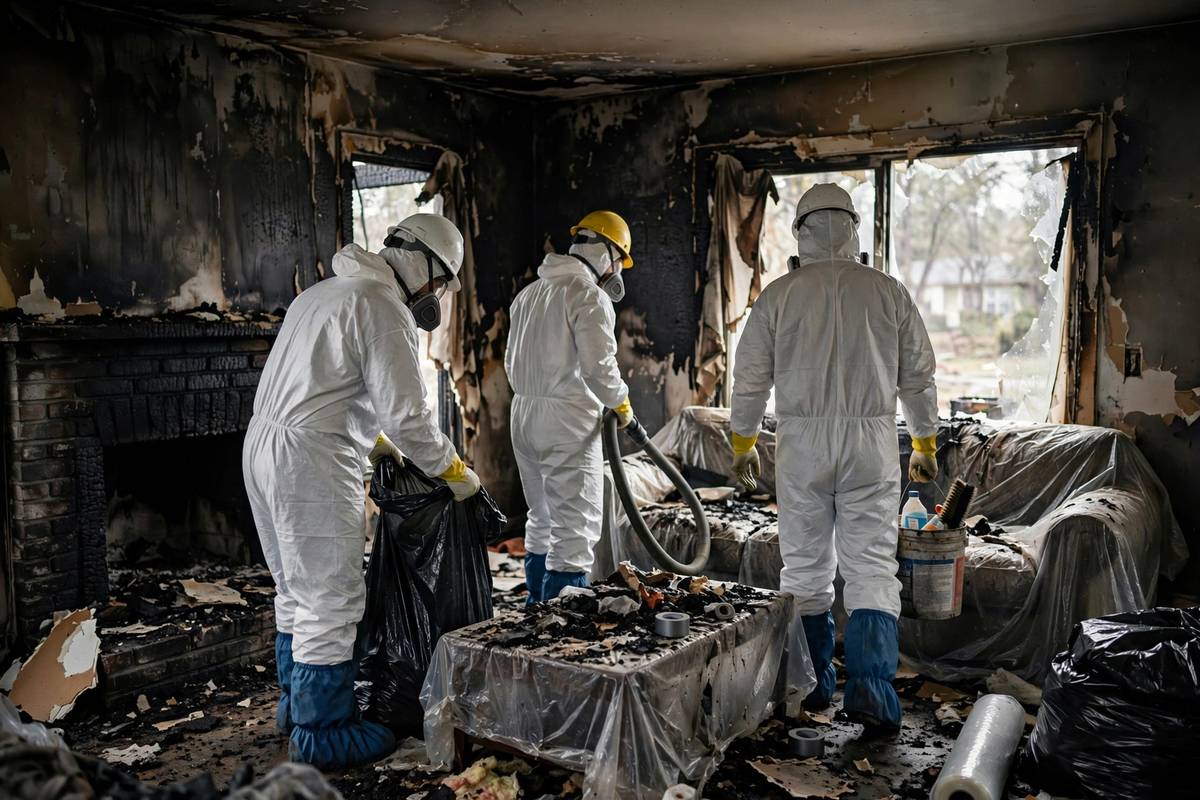
What removes it is sequence, not scent: find and remove or seal the source material, clean surfaces with the dry first method, clean or seal ducts as needed, then run professional deodorizing on the cleaned space. Skipping to the last step is the most common reason odor jobs fail and have to be done twice.
Request a callback
Prefer to talk later? Leave your details and an independent local pro will call you back. No charge to you, no obligation.
Telegraph Road Fire Restoration is a free referral service. Submitting this form connects you with independent local contractors who provide the work.